How much protein a day to build muscle
To build muscle, aim for 1.8–2.2 g of protein per kilogram of body weight per day. For an 80 kg person that is 145–175 g, most easily spread as 35–45 g per meal across four meals. The floor below which results visibly suffer is 1.6 g/kg; above 2.2 g/kg there is no practical gain for most people, only calories that would serve you better as carbohydrates.
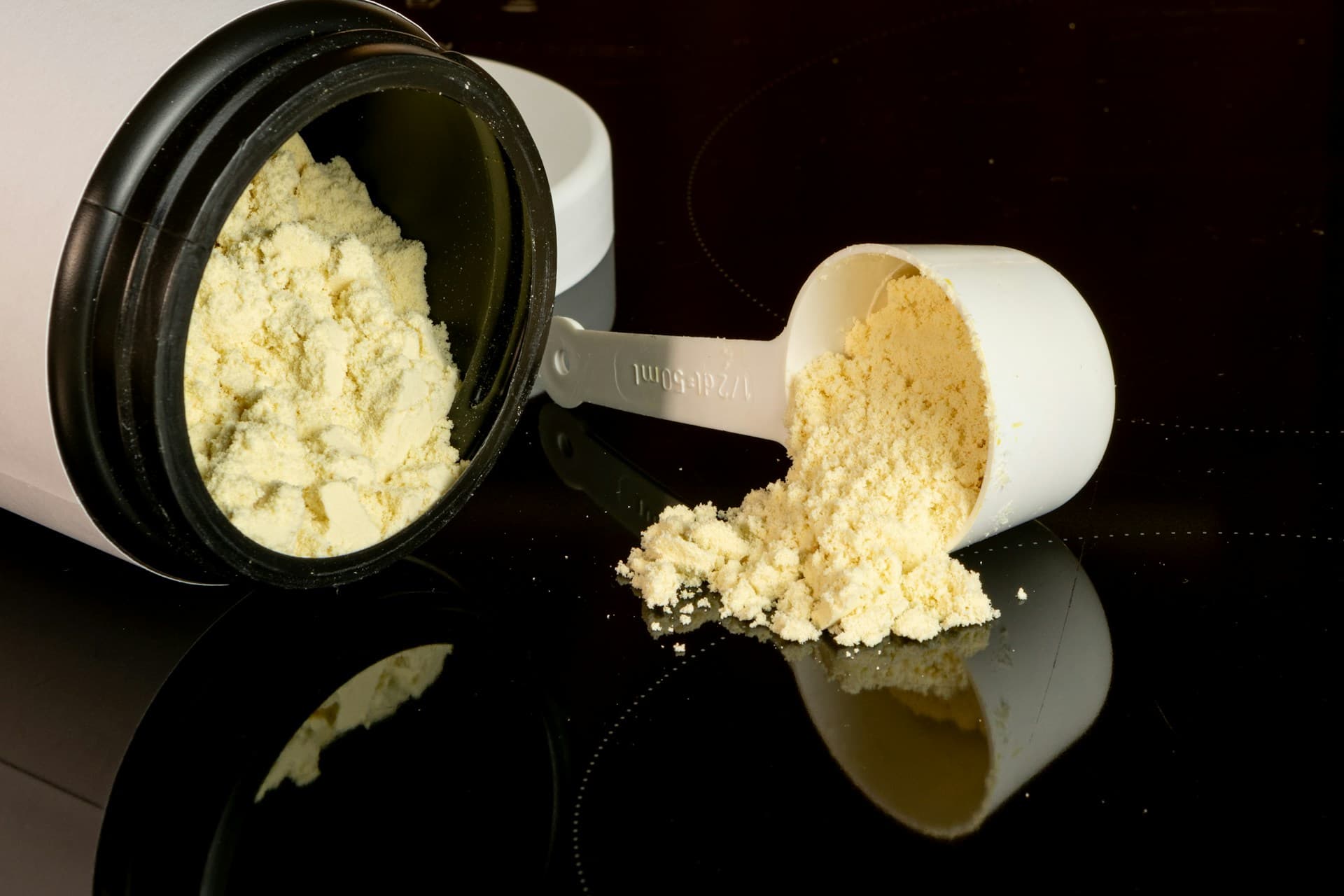
How much protein a day for muscle growth
The recommendation is tied to body weight, not to the number of meals or the amount of training. The 1.8–2.2 g/kg range covers both people building muscle in a surplus and people recomposing in a deficit — with the caveat that in a deficit you sit closer to the upper end, because that is when protein protects the muscle you already have.
Daily target and what it means per meal if you eat four times a day:
| Body weight | Per day | Per meal (4×) | In a deficit aim for |
|---|---|---|---|
| 60 kg | 110–130 g | 28–33 g | 130 g |
| 70 kg | 125–155 g | 32–39 g | 155 g |
| 80 kg | 145–175 g | 36–44 g | 175 g |
| 90 kg | 160–200 g | 40–50 g | 200 g |
| 100 kg | 180–220 g | 45–55 g | 220 g |
If you carry substantial excess weight, base the calculation on your target weight. Someone at 120 kg aiming for 90 kg needs around 180 g, not 260 g.
Your exact number from your measurements: Calorie & macro calculator · Protein intake
Why 1.8 g/kg and not the 1 g/kg on the label
The 0.8–1 g/kg figure you meet on packaging is an estimate of the minimum needed to prevent deficiency in an average, inactive adult. That is not the same as the amount that optimises muscle building in someone lifting three to five times a week.
Strength training raises the demand for raw material, and a calorie deficit raises it further, because the body is hunting for energy and can reach for muscle. That is why the recommendation for someone who trains and is losing weight sits at roughly double that minimum.
How to spread protein through the day
The daily total matters far more than the timing. Distribution is secondary but not irrelevant — the practical rule is 20–40 g per meal across 3–5 meals, rather than 150 g in one evening meal.
- Breakfast is usually the hole. Most people eat 5–10 g in the morning and then have to catch up at night. Eggs, skyr or a scoop in porridge fix it without thinking.
- Every meal gets a protein anchor. Pick the protein source first, then add the carbohydrate and vegetables — not the other way round.
- Post-workout is not a race against the clock. What matters is a meal within a couple of hours around training; the 30-minute „anabolic window” is an outdated simplification.
- A slower source before bed helps. Cottage cheese or Greek yoghurt keep amino acids trickling in overnight.
The best protein sources per calorie
In a deficit what matters is not only how much protein a food has, but how much it delivers per calorie. The last column is that ratio, and it explains why tuna and white fish beat salmon even though salmon is an excellent food.
| Food | Protein | kcal | Protein per 100 kcal |
|---|---|---|---|
| Tuna in water, 100 g | 26 g | 116 | 22 g |
| White fish, 100 g | 22 g | 100 | 22 g |
| Whey scoop | 24 g | 120 | 20 g |
| Chicken breast, 100 g | 31 g | 165 | 19 g |
| Skyr / Greek yoghurt, 100 g | 11 g | 63 | 17 g |
| Beef 90/10, 100 g | 26 g | 190 | 14 g |
| Cottage cheese, 100 g | 11 g | 98 | 11 g |
| Salmon, 100 g | 20 g | 208 | 10 g |
| Egg, 1 piece | 6.3 g | 78 | 8 g |
These are the same values the MicroPlan food database uses, for cooked food unless stated otherwise.
In practice: if your daily target is 175 g, three meals with 120 g of chicken or fish plus one yoghurt and one scoop cover the whole thing without strain.
Ready-made meals built around these numbers: Meal plan
The vegan and vegetarian version
The target in grams stays the same, but the route is harder for two reasons: plant sources carry less protein per calorie, and most have a less complete amino acid profile. The fix is not exotic — combine sources and raise the target by about 10%.
| Food | Protein | kcal | Protein per 100 kcal |
|---|---|---|---|
| Plant protein scoop | 21 g | 110 | 19 g |
| Tofu, 100 g | 8 g | 76 | 11 g |
| Tempeh, 100 g | 19 g | 193 | 10 g |
| Cooked lentils, 100 g | 9 g | 116 | 8 g |
| Soy milk, 100 ml | 3.3 g | 41 | 8 g |
| Soy yoghurt, 100 g | 4 g | 50 | 8 g |
| Cooked beans, 100 g | 9 g | 127 | 7 g |
| Cooked chickpeas, 100 g | 9 g | 164 | 5 g |
| Oats, 100 g | 13 g | 380 | 3 g |
Soy and its products (tofu, tempeh, soy milk) have the most complete profile among plant sources, which makes them the easiest foundation for a vegan plan.
- Combine legumes and grains across the day — lentils with rice, beans with bread, chickpeas with couscous. They do not have to be in the same meal.
- Raise the target to 2.0–2.4 g/kg if you are vegan, to offset the lower usability.
- Powder earns its place here more than on a mixed diet — 21 g from one scoop is hard to replace with 250 g of chickpeas carrying 400 kcal.
- Watch B12, iron and omega-3 — these are the usual gaps on a plant-based diet and are worth reviewing with a dietitian.
Do you actually need protein powder
Not if you hit the target with food. Powder is not better than chicken or yoghurt — it is simply a convenient way to add 20–25 g of protein for 110–120 kcal, with no cooking and without the fullness that would ruin your next meal.
It earns its place in three situations: when your daily target is high, when you are vegan, and when your schedule makes you skip meals. In every other case it is an option, not a requirement.

Can too much protein be harmful
In healthy adults, intakes within the recommended range are not considered a problem. The practical issues arrive before any health ones: past roughly 2.5 g/kg protein starts crowding carbohydrates and fat out of the plan, and gym energy and satiety both drop.
If you have kidney or liver disease, take prescribed medication, or are pregnant or breastfeeding — agree your protein intake with a doctor or dietitian. The figures here are general recommendations for healthy adults who train and are not medical advice.
Build a plan that already hits these numbers: MicroPlan planner · Body recomposition
In short
- For muscle growth aim for 1.8–2.2 g of protein per kilogram a day, upper end in a deficit.
- Spread it as 20–40 g per meal across 3–5 meals; breakfast is the usual gap.
- Judge sources by protein per calorie — tuna, white fish, whey, chicken and skyr lead.
- Vegans keep the same target plus about 10%, with soy as the base and legumes combined with grains.
- Protein powder is convenience, not a requirement — useful when the target is high or the schedule is tight.
Frequently asked questions
How much protein a day for muscle if I weigh 80 kg?
About 145–175 g a day, which is 1.8–2.2 g per kilogram. If you are also in a calorie deficit, stay near the upper end, around 175 g, because protein is then protecting the muscle you already have.
Can I build muscle without protein powder?
Yes. Powder is a convenient source, not a special ingredient. Chicken, fish, eggs, yoghurt, cottage cheese and legumes will cover any target — powder only solves speed and scheduling.
How much protein per meal can the body use?
The idea of a hard 30 g per meal limit is a simplification. The practical recommendation is 20–40 g per meal across 3–5 meals, because that makes the daily target and satiety easier to manage, not because the excess is wasted.
How much protein a day for vegans?
The same target in grams plus about 10% to offset the lower usability of plant sources — in practice 2.0–2.4 g/kg. Soy, tofu, tempeh, legumes with grains and a plant protein scoop cover that comfortably.
Does protein help with fat loss?
In two ways: it is the most filling of the macronutrients, so the deficit is easier to hold, and it preserves muscle while calories fall, so what you lose is fat rather than muscle.
Tools this article uses
Read next
What to eat before and after a workout
Before training, carbs with some protein; after, protein plus carbs. How many hours before, concrete meal examples, and what actually changes results.
Body recomposition: how to lose fat and gain muscle at the same time
Recomposition works on a small deficit, 1.8–2.2 g protein/kg and strength training. Who it suits, how to set calories and how to measure progress.
How many calories a day to lose weight
How many calories a day to lose weight: your TDEE minus 15–20%. A table by sex, age and weight, the formula, and realistic weekly loss.